Students discuss what the group should do before the story moves forward.
 LAST BELL STUDIO
01 / CLASSROOM GAMES
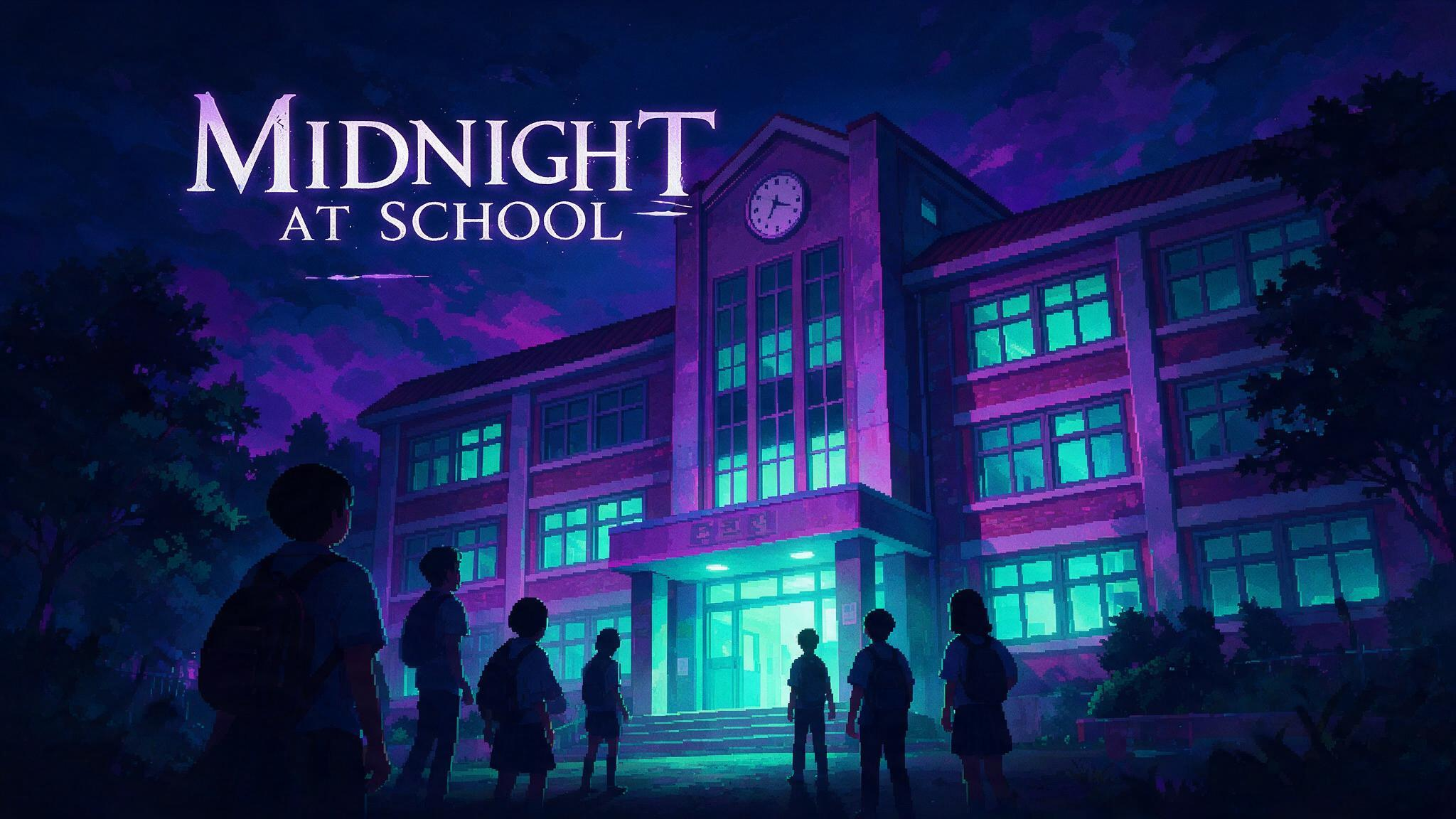
MIDNIGHT
AT SCHOOL
A choice-driven speaking adventure after dark.
STORY GAMEWHOLE CLASSCHOICE-DRIVENTUTORIAL MODE
WHAT IT DOES
BUILT FOR CLASS.
The conversation comes from solving a problem, not answering an isolated prompt.
Teachers can learn the game inside the game before using it with a class.
THREE STEPS
HOW IT WORKS.
Put the class inside the situation and reveal the first problem.
Students predict, persuade, disagree and decide what the class should do.
Choose an option and discover the next consequence.
TEACHER FIELD NOTES
Make a choice, then defend it.
Midnight at School places a speaking activity inside an after-dark school story. Instead of asking students for an opinion without context, it gives the class a situation to respond to. The teacher advances the story after students compare the available choices.
Who is it for?
Consider it for learners who can understand a short situation and give a simple reason for a choice. For many classes, that means older primary or secondary learners with language support. Preview the suspenseful setting and reading demands yourself; it is not an age-certified course or a substitute for checking your class’s needs.
Try a twenty-minute discussion segment
Display the opening situation and check understanding without explaining every possible response. Ask pairs to finish “We should… because…” before taking opinions from the room. Give another pair a chance to disagree politely, then make the class choice and reveal what follows.
At the next decision, change the pair spokesperson. This prevents the story from becoming a conversation between the teacher and only the fastest readers. Twenty minutes is a suggested lesson segment, not a promise that every route will finish in that time.
Support the discussion
Put three short frames on the board: “I think…”, “What if…?” and “I disagree because…”. Accept a short reason first, then ask a follow-up question. You can clarify a difficult word while leaving the decision itself to the class. The aim is understandable reasoning, not finding an answer the teacher has already chosen.
What should I prepare?
Preview the opening and Tutorial Mode, check the screen and sound, and decide how students will agree on a choice. One teacher-controlled computer is enough for a whole-class discussion; students can rehearse with partners or jot down predictions on paper.
How can I finish the lesson?
Ask learners to name one decision they supported and one they would change. Have them explain what new information changed their view. This turns the story into a short reflection on their language and reasoning, even if you stop before an ending.
TUTORIAL
SEE IT IN ACTION.
BUILT-IN TUTORIAL MODE
YOU DON'T HAVE TO MEMORIZE THE APP.
Each classroom app is designed to teach itself through an interactive Tutorial Mode, so you can learn the controls by using them.
KEEP BROWSING