 LAST BELL STUDIO
CLASSROOM NOTES · PHONICS
My phonics dictation race: blends, boards and a comeback score.
A team dictation game where students build and write blend words, then race to the board while the score stays close enough to matter.
This is one way I turn blend practice into a team activity. I make groups of two or three students, show a board of possible word beginnings and endings, then dictate one target word at a time. Teams write the word and put it up. The first three correct teams earn points, with the value rising every three examples.
The increasing points are deliberate. A team can fall behind early and still have a reason to stay focused in the later rounds. The aim is not to make one fast group unbeatable; it is to keep the whole class listening, discussing spelling and checking the blend choices together.
01 / SET UP
Prepare small teams and give each one a letter
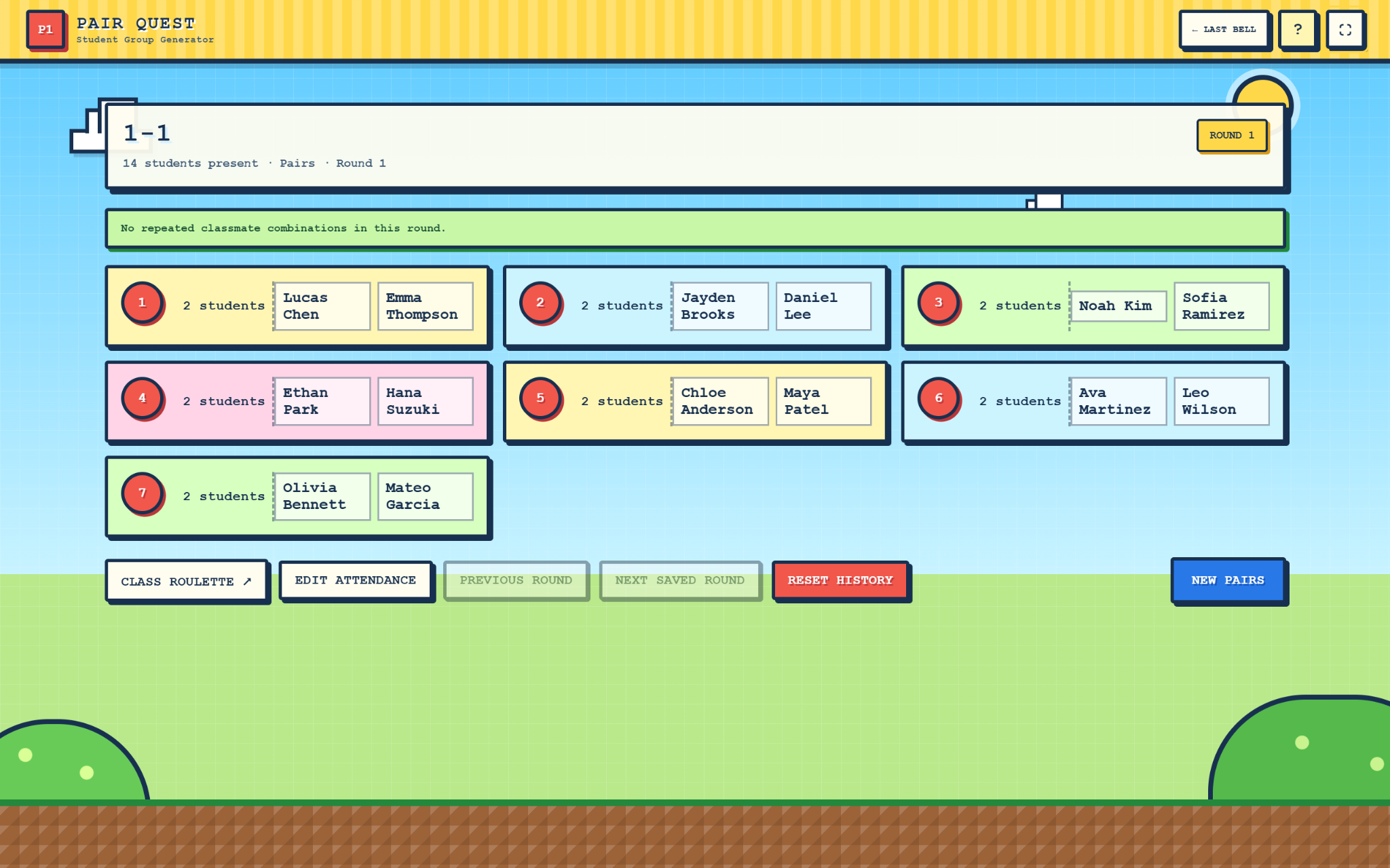
I use Pair & Group Generator to make teams of two or three. Once the teams are set, I give each group a letter - for example A, B, C and D. Those letters are the team names I use in Scoreboard, so students can immediately see which score belongs to them.
Before starting, give every team a small board or sheet for writing. Make the movement and checking rules clear: one student may bring up the answer, everyone helps decide the spelling, and teams should wait for their answer to be checked before changing it.
Use one tool to make the groups, then enter the same team letters into Scoreboard before the first word. This avoids spending the middle of the game setting up the display.
Open Pair & Group Generator →Open Scoreboard →
02 / SHOW
Put the blend choices where everyone can see them
My board has possible word beginnings on one side and endings on the other. Students combine one from each side to make the word they hear. The example includes cr, str, shr, br, gr, pr, dr, fr, scr, tr, thr and wr, with endings including -ive, -ake, -ain, -ay, -ow and -oam. Most beginnings contain consonant blends; wr is different because the w is silent.
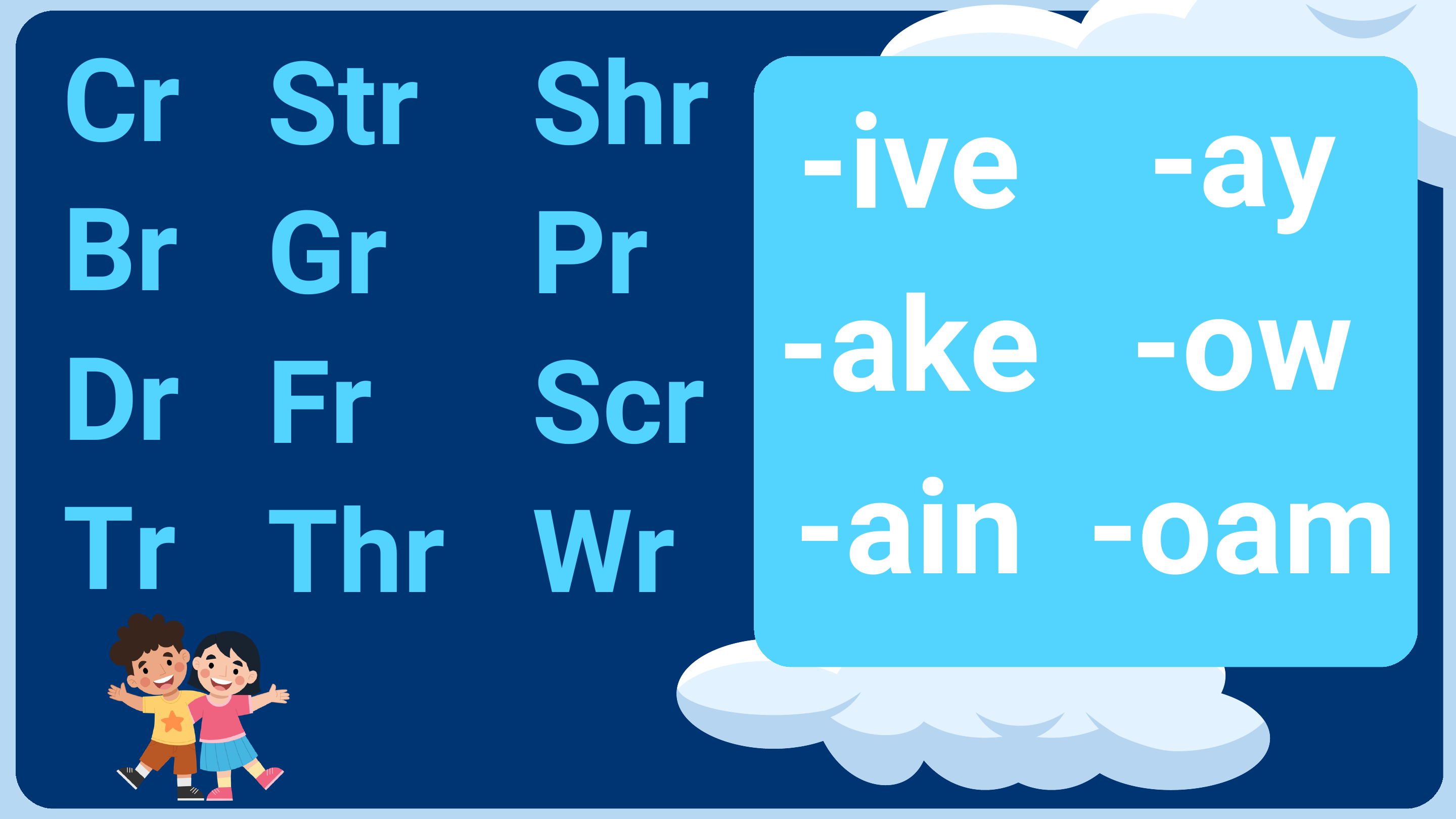
You can use this board as a visual model, but do not feel locked into this exact set. Select combinations that match your class's current phonics focus. Before students arrive, make sure every word you plan to dictate is genuinely possible from the pieces on the board.
03 / DICTATE
Run twelve short rounds
I use twelve examples. For each one, I say the target word. Teams listen, decide which blend and ending they need, write the whole word, and bring or hold up their answer. I check the first three correct teams and award the round's points.
- Say the word clearly and repeat it using the same routine each time.
- Give teams a brief moment to discuss and write.
- Check the first three answers that are ready.
- Ask one team to identify the beginning blend and ending before moving on.
- Update Scoreboard where the class can see it.
That short explanation after each word matters. It turns the race back into phonics practice: students have a chance to connect the spoken word with the visible parts rather than simply chasing a fast finish.
04 / SCORE
Use points that rise every three examples
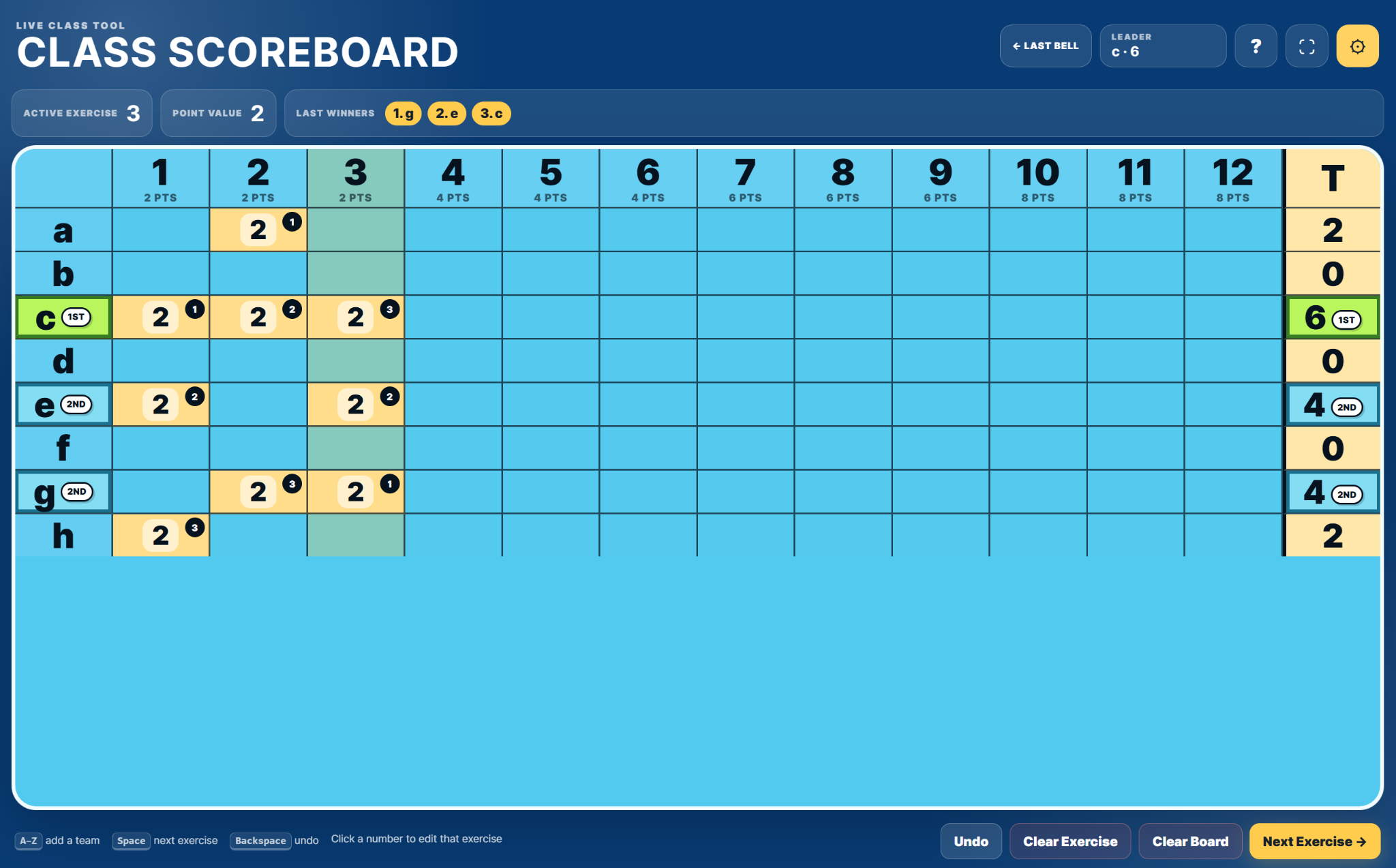
The Scoreboard shown below divides twelve exercises into four blocks of three. Each of the first three correct teams receives the displayed exercise value. First, second and third place are recorded, but they do not receive different point amounts in this example.
- Exercises 1–3: 2 points per qualifying team.
- Exercises 4–6: 4 points per qualifying team.
- Exercises 7–9: 6 points per qualifying team.
- Exercises 10–12: 8 points per qualifying team.
Record the results without interrupting the lesson
Check the active exercise number before entering results. Record the letters of the first three teams with correct answers in finishing order, then check the last-winners display. Use Next Exercise to advance. The interface also shows Undo and lets you click an exercise number to revisit it. Keep the groups fixed for all twelve words so the totals remain meaningful.
One late success is worth more than one early success. For example, a correct finish in exercise 10 earns 8 points, the same as four qualifying finishes in the first block. That creates opportunities to recover, although it does not guarantee a close result. Accuracy still comes before speed: an incorrect answer does not take one of the three scoring places.
Ways to adapt the dictation race
- For a newer class: reduce the board to a few blends and endings, say the word twice, and let teams point to the pieces before writing.
- For more individual accountability: rotate the writer or runner each round, while the rest of the team still discusses the answer.
- For less movement: have teams hold up mini whiteboards at their tables instead of sending an answer to the front.
- For a calmer competition: give every correct team a point and use the rising values for a class target rather than a winner.
- For a final review: leave the completed score visible and ask teams which blend or ending caused the most uncertainty.
Keep the points in service of the phonics
The Scoreboard makes the team progress visible, but the real learning happens in the small decisions: hearing the word, locating the likely blend, testing the ending and writing it together. The letters, the board and the rising point values simply give that practice a clear shape.